
The Masai Mara National Reserve is one of Africa’s most spectacular wildlife destinations and a bucket-list destination for travelers from around the world. Famous for its abundant wildlife, dramatic landscapes, Big Five sightings and the annual Great Wildebeest Migration, the Masai Mara offers an unforgettable safari experience throughout much of the year.
But what is the best time to visit Masai Mara?
The answer depends on what you want to experience. If your dream is to witness the Great Wildebeest Migration and dramatic Mara River crossings, July to October is generally the most popular period. However, other months can offer excellent wildlife viewing, fewer tourists, greener landscapes and potentially better-value safari experiences.
At Malvic Tour & Safaris Ltd, we help travelers plan Kenya safari experiences around their preferred travel dates, budget and wildlife interests.
Quick Answer: What Is the Best Time to Visit Masai Mara?
For travelers seeking the best combination of wildlife viewing, favorable weather and the Great Wildebeest Migration, July to October is generally considered the prime safari season in the Masai Mara.
August and September are particularly popular for travelers hoping to witness the wildebeest migration and possible Mara River crossings. However, the exact timing and location of wildlife activity can vary from year to year because the migration is a natural phenomenon influenced by rainfall and availability of fresh grazing.
For general wildlife viewing, the Masai Mara is an excellent year-round destination.
According to the Kenya Wildlife Service, Kenya’s parks and reserves offer year-round attractions, while the drier periods generally provide easier wildlife viewing because vegetation is shorter and wildlife is easier to spot.
Masai Mara Safari Seasons at a Glance
Period Wildlife Viewing Migration Crowds Safari Experience
January–February Excellent Low Moderate Excellent
March Very Good Low Moderate Good
April–May Good Low Low Budget-friendly
June Very Good Migration begins moving Moderate Excellent
July Excellent Migration season High Excellent
August Excellent Peak migration period High Exceptional
September Excellent Peak migration period High Exceptional
October Excellent Migration may continue Moderate Excellent
November Very Good Migration mostly gone Low–Moderate Good
December Excellent Low Moderate–High Excellent
Wildlife and migration patterns are naturally variable, so no month can guarantee a particular animal sighting or river crossing.
Best Time to Visit Masai Mara for the Great Wildebeest Migration
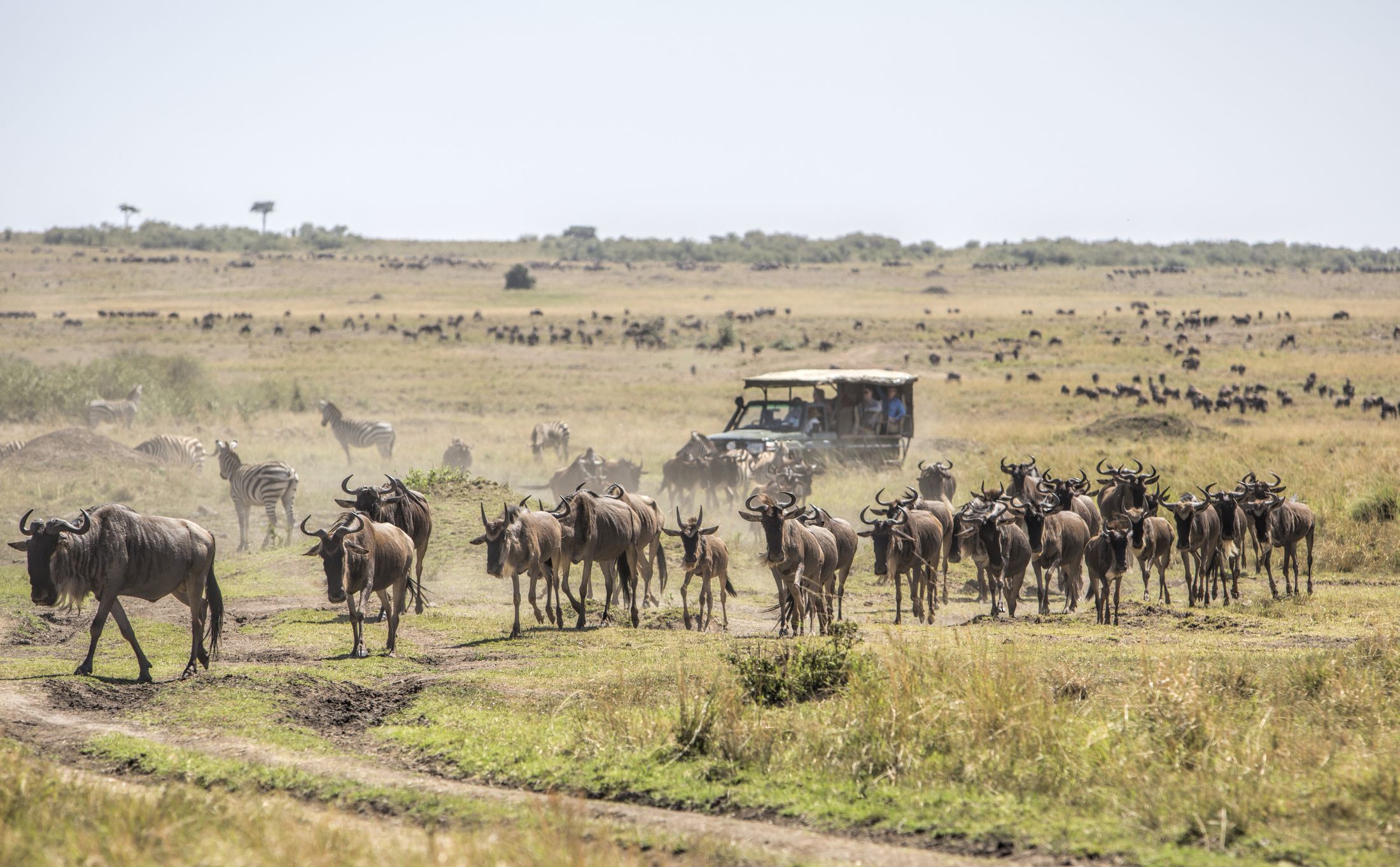
The Great Wildebeest Migration is one of the world’s most extraordinary wildlife spectacles. Every year, huge numbers of wildebeest, accompanied by zebras and other grazing animals, move between the Serengeti ecosystem in Tanzania and the Masai Mara ecosystem in Kenya.
The migration is not a single event occurring on a fixed date. Instead, it is a continuous movement influenced by rainfall, grazing conditions and water availability.
When the herds reach the Masai Mara, visitors may have opportunities to witness dramatic predator-prey interactions, large herds crossing the plains and, under the right circumstances, spectacular river crossings.
July: The Beginning of the Peak Migration Season
July is one of the most sought-after months for a Masai Mara migration safari.
As the herds move northward from Tanzania, increasing numbers of wildebeest may begin entering the Mara ecosystem. The exact timing can vary, however, so travelers should avoid choosing a date based solely on a promised river crossing.
July also offers generally favorable safari conditions, making it an excellent month for game drives and photography.
August: One of the Most Popular Months
August is widely regarded as one of the best months for travelers interested in the Great Wildebeest Migration in Kenya.
Large herds may be present in the Masai Mara, and river crossings can occur when migrating animals encounter the Mara River. These crossings can be dramatic, but they are unpredictable and should never be guaranteed by a safari operator.
Because August is extremely popular, safari camps, lodges and vehicles can be in high demand.
If you plan to travel in August, booking your Masai Mara safari well in advance is strongly recommended.
September: Excellent for Wildlife and Migration
September remains an excellent month for a Masai Mara migration safari.
The reserve can continue to host significant numbers of wildebeest, while resident wildlife—including lions, leopards, cheetahs, elephants, buffalo and giraffes—remains a major attraction.
September can be particularly appealing to photographers because of the combination of wildlife activity, open landscapes and favorable safari conditions.
October: Excellent Wildlife Viewing
October can still provide outstanding wildlife experiences.
Some migrating herds may remain in the Masai Mara, although their distribution and movement depend on ecological conditions. The crowds may also begin to decline compared with the busiest parts of the migration season.
For travelers who want excellent wildlife viewing but prefer somewhat less congestion, October can be a very attractive option.
Best Time to Visit Masai Mara for Big Five Wildlife
You do not have to visit during the migration to experience excellent wildlife viewing.
The Masai Mara is home to an impressive range of wildlife, including:
Lions
Leopards
Cheetahs
Elephants
Buffalo
Hippos
Giraffes
Zebras
Wildebeest
Hyenas
Gazelles
Warthogs
Numerous bird species
The reserve’s combination of open grasslands, riverine environments and diverse habitats makes it one of Kenya’s premier wildlife destinations.
For travelers whose priority is seeing predators such as lions, cheetahs and leopards, the dry months can be particularly rewarding because wildlife is often easier to locate in areas with shorter vegetation.
You can learn more about the destination on our dedicated Masai Mara destination page.
Visiting Masai Mara in January and February
January and February are excellent months for a Kenya wildlife safari.
These months can provide:
Generally favorable weather
Good wildlife viewing
Green and attractive landscapes
Excellent photography conditions
Fewer crowds than the peak migration months
If your priority is wildlife rather than the Great Migration, January and February can be an excellent alternative to July–September.
These months can also be attractive for travelers looking for a more relaxed safari experience.
Visiting Masai Mara in March
March can still offer good wildlife viewing, although weather conditions may become less predictable as Kenya approaches the longer rainy season.
The reserve remains rewarding for travelers interested in resident wildlife and photography.
One advantage of traveling outside the peak migration season is that you may experience a quieter safari environment.
Visiting Masai Mara in April and May
April and May are generally associated with Kenya’s long rains.
For travelers seeking the cheapest time to visit Masai Mara, these months can be worth considering.
There are several potential advantages:
Fewer tourists
Lush green scenery
Excellent photography opportunities
Potentially better-value accommodation and safari packages
A quieter atmosphere
However, rain can affect road conditions and travel logistics. Kenya Wildlife Service notes that April–June is generally the low season because of the long rains and that some park roads may require four-wheel-drive vehicles.
For adventurous travelers who don’t mind occasional rain, this can be an excellent time to experience a quieter side of the Masai Mara.
Visiting Masai Mara in June
June is an exciting transition month.
The weather generally becomes drier, and wildlife viewing conditions can improve. The Great Wildebeest Migration may also begin approaching or entering the wider Mara ecosystem, although the exact timing varies.
June is therefore a good option for travelers who want:
Excellent wildlife viewing
Fewer crowds than peak migration months
Improving dry-season conditions
A chance of early migration activity
Visiting Masai Mara in July
July is one of the most popular months for a Masai Mara safari.
The combination of dry conditions, excellent wildlife viewing and the potential arrival of migrating wildebeest makes July highly desirable.
If you are planning a July safari, consider booking early because demand for popular accommodation and safari vehicles can be high.
Visiting Masai Mara in August
For many travelers, August is the best month to visit Masai Mara for the Great Migration.
The reserve may be filled with large herds, while predators take advantage of the abundance of prey. The possibility of witnessing a Mara River crossing is one of the major attractions, but it is important to understand that river crossings cannot be scheduled like a normal tourist activity.
Animals may gather near the river for hours or days before crossing—or they may cross at a different location or time.
A knowledgeable safari guide can greatly improve your chances of finding active wildlife and understanding animal behavior.
Visiting Masai Mara in September
September is another outstanding month for a Maasai Mara safari.
The migration may still be active, and the reserve continues to offer excellent opportunities for Big Five sightings.
September can be particularly attractive for:
Wildlife photographers
First-time safari travelers
Couples
Families
Luxury safari travelers
Great Migration enthusiasts
The high demand associated with migration season means that early planning is recommended.
Visiting Masai Mara in October
October can be an excellent compromise between migration-season wildlife and somewhat reduced visitor numbers.
The wildebeest may still be present, depending on the year’s migration pattern, while resident wildlife remains abundant.
For travelers who want excellent game viewing without necessarily traveling during the busiest part of August, October is worth considering.
Visiting Masai Mara in November
November is generally associated with the short rains.
The landscape can become greener, and visitor numbers may be lower than during the peak migration season.
This can be an appealing period for travelers who prioritize:
Value
Photography
Fewer crowds
Green landscapes
Flexible safari planning
Visiting Masai Mara in December
December is another attractive month for a Kenya safari.
The festive season can bring increased demand, especially around Christmas and New Year.
Wildlife viewing remains excellent, and the Masai Mara continues to offer opportunities to see its resident wildlife.
If you intend to travel during Christmas or New Year, early booking is advisable.
What Is the Best Time for a Masai Mara River Crossing?
One of the most frequently asked questions is:
“When is the best time to see the wildebeest cross the Mara River?”
The answer is that there is no guaranteed date.
River crossings depend on the movement of the herds and environmental conditions. The most commonly sought period is generally July through September, but crossings can occur at different times.
This unpredictability is part of what makes the Great Migration so fascinating.
A responsible safari company should never guarantee that you will see a river crossing simply because you have booked a particular date.
Instead, your guide should monitor wildlife movements and position your vehicle where there are the best available opportunities.
Best Time to Visit Masai Mara for Photography
The Masai Mara is a dream destination for wildlife photographers.
The best time depends on the type of images you want.
For Migration Photography
July–October offers excellent opportunities for photographing large herds, predators and dramatic migration scenes.
For Green Landscape Photography
The wetter periods can produce vibrant green landscapes and dramatic skies.
For Predator Photography
Dry-season conditions can make it easier to spot predators in open areas.
For Sunrise and Sunset Photography
Regardless of the month, early morning and late afternoon game drives provide some of the best natural light.
Best Time to Visit Masai Mara for Budget Travelers
If your priority is keeping your safari costs under control, consider traveling outside the peak July–September period.
April, May and parts of November can provide opportunities for travelers looking for more affordable safari experiences, although weather conditions need to be considered.
Malvic Tour & Safaris offers a range of safari options designed for different budgets, including budget, private and luxury experiences.
Explore our Kenya safari packages to compare different safari experiences.
You can also browse our complete collection of Kenya safari tours and find an itinerary that matches your travel plans.
Best Time for a Luxury Masai Mara Safari
Luxury travelers can enjoy the Masai Mara throughout the year, but July through October is particularly popular because of the Great Migration.
A luxury safari can combine:
Premium safari lodges and camps
Private 4×4 safari vehicles
Experienced safari guides
Personalized game drives
Gourmet dining
Bush breakfasts
Sundowners
Photography experiences
Cultural experiences
For travelers looking for a broader Kenya experience, Malvic Tour & Safaris also offers multi-destination itineraries combining the Masai Mara with destinations such as Lake Nakuru, Lake Naivasha and Amboseli.
How Many Days Do You Need in Masai Mara?
For a first-time visitor, we recommend spending at least 3 days and 2 nights in the Masai Mara.
This gives you enough time for multiple game drives and allows your safari guide to explore different areas of the reserve.
If your primary objective is the Great Migration, consider staying 4 or more nights.
More time gives you additional opportunities to locate migrating herds, predators and other wildlife rather than relying on a single day of game viewing.
For travelers with limited time, our 4 Days Masai Mara and Lake Nakuru private safari combines two outstanding Kenyan destinations.
For a more comprehensive Kenya adventure, consider our 7 Days Masai Mara, Lake Nakuru, Lake Naivasha and Amboseli safari.
Why Choose Malvic Tour & Safaris for Your Masai Mara Safari?
Choosing the right safari operator can make a major difference to your experience.
At Malvic Tour & Safaris Ltd, we create Kenya safari experiences designed around your interests, budget and preferred travel dates.
Our safari experiences include options for:
Budget travelers
Private travelers
Families
Couples
Honeymooners
Wildlife photographers
Luxury travelers
Great Migration enthusiasts
First-time safari visitors
Our Kenya safari portfolio includes Masai Mara, Amboseli, Lake Nakuru and other major destinations across Kenya.
You can explore our Kenya safari experiences or browse our Masai Mara safari options.
Frequently Asked Questions About the Best Time to Visit Masai Mara
Is Masai Mara open all year?
Yes. The Masai Mara is a year-round safari destination, although wildlife conditions, weather, road conditions and visitor numbers vary throughout the year.
What is the best month to visit Masai Mara?
For the Great Wildebeest Migration, August and September are among the most popular months. However, July and October can also provide excellent migration and wildlife experiences.
Is July a good time to visit Masai Mara?
Yes. July is an excellent month for wildlife viewing and can coincide with the arrival of migrating wildebeest.
Is August the best time for Masai Mara?
August is one of the most popular months because of the potential for large wildebeest herds and river crossings. However, crossings cannot be guaranteed.
Is September good for a Masai Mara safari?
Yes. September is generally an excellent month for wildlife viewing and can provide exceptional opportunities to experience the Great Migration.
Can I visit Masai Mara during the rainy season?
Yes. Rainy-season safaris can offer green scenery, fewer crowds and potentially better value. Travelers should, however, be prepared for changing road conditions.
How far in advance should I book a Masai Mara safari?
For peak migration months, especially July through September, booking several months in advance is advisable. This is particularly important if you want a specific lodge, camp or private safari vehicle.
Final Verdict: When Should You Visit Masai Mara?
There is no single “perfect” time for everyone.
If your dream is to witness the Great Wildebeest Migration, plan your trip around July to October, with August and September being especially popular.
If your priority is general wildlife viewing, the Masai Mara can reward you throughout the year.
If you want fewer crowds and potentially better value, consider the shoulder and low seasons.
Ultimately, the best time to visit Masai Mara is the time that matches your safari goals, budget and travel preferences.
Whether you want to witness the Great Migration, search for the Big Five, photograph African wildlife, enjoy a romantic honeymoon safari or experience Kenya with your family, Malvic Tour & Safaris can help you design the right itinerary.
Ready to Experience the Masai Mara?
Explore our Masai Mara safari packages, browse our Kenya safari tours, or view our full range of safari packages.
Plan your Masai Mara adventure with Malvic Tour & Safaris and experience the magic of Kenya’s world-famous wildlife destination.